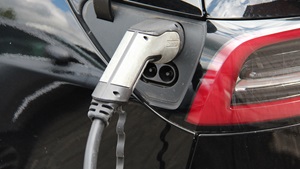
Het is nog steeds mogelijk om subsidie aan te vragen voor het aanleggen van laadinfrastructuur op eigen of gehuurd terrein voor elektrische werk-of voertuigen. Op alle onderdelen van de Subsidieregeling Private Laadinfrastructuur bij bedrijven (SPRILA) was begin oktober 2026 nog budget beschikbaar.
Voor wie?
Om voor de SPRILA in aanmerking te komen moet je onderneming in Nederland gevestigd zijn, economische activiteiten uitvoeren en ingeschreven staan bij de KVK. Je onderneming moet eigen elektrische voertuigen of bouwwerktuigen hebben.
Maar ook als je werknemers of je klanten elektrisch rijden kun je in aanmerking komen voor de SPRILA. Hetzelfde geldt als je vastgoedeigenaar bent en je huurders laadinfrastructuur nodig hebben.
Let op! Ga je als ondernemer de laadinfrastructuur exploiteren? Dan kom je niet in aanmerking voor de SPRILA.
Voorwaarden
Voorwaarde voor de SPRILA is dat je de laadinfrastructuur in Nederland op eigen terrein of op een gehuurd terrein plaatst. De laadinfrastructuur mag niet openbaar zijn maar alleen op bepaalde momenten te gebruiken zijn door een specifieke groep gebruikers.
Let op! Er gelden nog meer voorwaarden die je hier kunt vinden.
Hoogte subsidie laadinfrastructuur
De hoogte van de subsidie is afhankelijk van het soort laadstation (AC of DC) in combinatie met het maximaal aan het elektrisch voertuig te leveren vermogen.
De hoogte van de subsidiebedragen lopen op van € 400 voor een AC-laadstation met een vermogen vanaf 11 kW tot € 44.000 voor een DC laadstation met een vermogen vanaf 550 kW.
Let op! Als mkb-ondernemer kom je in aanmerking voor een verdubbeling van deze subsidiebedragen. Je hebt daarvoor een mkb-verklaring nodig, die je via deze link kunt maken.
Meer details over de hoogte van de subsidie vind je hier.
Subsidie batterij
Voor een batterij is maximaal tot 1.000 kWh subsidie mogelijk. Het subsidiebedrag is € 60 per kWh. Voor mkb’ers is dit € 85 per kWh. Voor de batterij gelden aanvullende voorwaarden.
Aanvragen
Aanvragen van de SPRILA is al mogelijk vanaf 20 januari 2026. Begin juni 2026 zijn de budgetten verhoogd voor laadinfrastructuren en batterijen. Begin oktober 2026 was van de € 68.500.000 voor laadinfrastructuren met AC- of DC-laadstations € 56.337.003 aangevraagd. Voor batterijen was op dat moment € 34.426.278 van de € 45.000.000 budget aangevraagd.
Is je subsidie lager dan € 25.000, dan ontvang je het volledige subsidiebedrag in één keer. Bij subsidies vanaf € 25.000, krijg je eerst een voorschot van 50%.
Let op! Aanvragen kan nog tot 18 december 12.00 uur. Houd er rekening mee dat de budgetten mogelijk eerder al op zijn.
OV-concessiehouders en touringcarbedrijven
OV-concessiehouders en touringcarbedrijven kunnen ook in aanmerking komen voor de SPRILA. Begin oktober 2026 was van het beschikbare budget van € 9.000.000 van deze groep € 1.124.308 aangevraagd.
Op 1 oktober 2026 is de Zelfstandigenwet in internetconsultatie gegaan. Het is de bedoeling meer duidelijkheid te bieden aan zelfstandigen en opdrachtgevers. Er wordt in dit verband gesproken over een veilige haven. De Zelfstandigenwet moet onnodige terughoudendheid bij opdrachtgevers bij het inhuren van zzp’ers tegengaan én zorgen dat zelfstandigen de verantwoordelijkheid nemen om risico’s af te dekken.
Twee toetsen
Het wetsvoorstel introduceert twee toetsen:
de zelfstandigentoets, en
de werkrelatietoets.
Zelfstandigentoets
Bij de zelfstandigentoets vindt een beoordeling plaats of de zelfstandige zich ook als echte zelfstandige gedraagt. Denk hierbij aan zaken als het hebben van een KvK-nummer en btw-nummer, een aparte rekening voor zakelijke transacties en meerdere opdrachtgevers (minimaal drie in het lopende en afgelopen kalenderjaar). Het is mogelijk om jarenlang één klant te hebben mits er daarnaast ook andere klanten zijn van enige omvang.
Let op! Dit criterium van minimaaldrie opdrachtgevers zorgt wel voor de nodige kritiek.
D zelfstandige moet verder jaarlijks een bepaald minimumbedrag besteden aan bepaalde voorzieningen om ondernemersrisico’s af te dekken zoals een arbeidsongeschiktheidsverzekering, een pensioenvoorziening en een verzekering tegen bedrijfsaansprakelijkheid.
Let op!Dit minimumbedrag is nu nog niet bekend, maar wordt later bekendgemaakt. Het gaat om een vast bedrag, ongeacht omzet of tarief. Ook dit punt heeft tot kritiek geleid. Het is dus wachten of deze punten nog aangepast worden.
Werkrelatietoets
De werkrelatietoets beoordeelt of de werkende zich binnen een specifieke opdracht als echte zelfstandige gedraagt. Daarvoor geldt dat beide partijen de wil moeten hebben om buiten een arbeidsovereenkomst te werken. Daarnaast moet de werkende vrij zijn om te bepalen hoe, waar en wanneer hij de werkzaamheden uitvoert (locatie- en tijdsgebonden werk uitgezonderd) en het werk voor eigen rekening en risico uitvoeren.
Veilige haven
De wet is niet verplicht, maar biedt een optie voor wie vooraf zekerheid wil (de ‘veilige haven’). Daarbij geldt dat er geen rangorde en geen weging is. Als er aan één criterium niet wordt voldaan, dan geeft de wet geen zekerheid. Van belang is de feitelijke uitvoering en niet wat op papier staat. Verliest een zelfstandige tijdens de opdracht een criterium, dan vervalt de veilige haven vanaf dat moment.
Wie niet aan de criteria van de wet voldoet, is niet vanzelf een werknemer. Er volgt dan een reguliere beoordeling, waarbij nog steeds geoordeeld kan worden dat sprake is van zelfstandigheid.
Let op! De wet is niet nodig en hoeft daarom niet toegepast worden op zelfstandigen bij wie duidelijk is dat ze zelfstandige zijn. Denk aan zelfstandigen die eenmalige – vaak korte – diensten leveren aan bedrijven, zoals advieswerk, het geven van een training, of eenmalig financieel advies.
Uitvoering
Een mogelijk opdrachtgever kan wat betreft de zelfstandigentoets bij een zzp’er navraag doen of deze aan genoemde criteria voldoet. Ook kan de zelfstandige zelf een dergelijke verklaring voorzien van bewijs opstellen. Daarnaast wordt het mogelijk dat er gewerkt wordt met een ‘derdenverklaring’, waarbij bijvoorbeeld een accountant of boekhouder zo’n verklaring afgeeft.
De voorwaarden voor de werkrelatietoets moeten opdrachtgever en opdrachtnemer per opdracht gezamenlijk afspreken en vastleggen, en in de praktijk ook zo uitvoeren.
Controlerende instanties, zoals de Belastingdienst of de Arbeidsinspectie, hebben als taak om te controleren of er in de praktijk ook wordt gewerkt conform wat is afgesproken.
Invoering
De beoogde invoering is 1 januari 2028, maar de wet moet nog worden ingediend bij de Tweede Kamer en daarna nog door de Eerste Kamer worden behandeld.
Let op! De consulatie loopt van 1 oktober tot en met 29 oktober 2026.
In het Belastingplan 2026 is voorgesteld om de bosbouwvrijstelling in een keer af te schaffen per 1 januari 2029. In het voorstel is geen overgangsrecht opgenomen.
Bosbouwvrijstelling
Voordelen uit bosbedrijf zijn bij toepassing van de bosbouwvrijstelling vrijgesteld van inkomstenbelasting of vennootschapsbelasting. Door de brede definitie van de begrippen ‘voordelen’ en ‘bos’ kunnen zowel bosbouwbedrijven als niet-bosbouwbedrijven van de vrijstelling gebruik maken.
Voorbeelden van niet-bosbouwbedrijven die (deels) gebruik kunnen maken van de bosbouwvrijstelling zijn bedrijven die winst maken met de verkoop van kerstbomen- en takken, de verhuur of verkoop van grafrechten op natuurbegraafplaatsen en de verkoop van snoeisel, zoals taxushagen voor de farmaceutische industrie.
Afschaffing per 1 januari 2029
Het kabinet stelt voor om de bosbouwvrijstelling per 1 januari 2029 af te schaffen omdat onderzoeksbureau SEO de bosbouwvrijstelling negatief beoordeeld heeft op doeltreffendheid en doelmatigheid. Zo is ruim 99% van de gebruikers van de bosbouwvrijstelling een niet-bosbouwbedrijf. Het kabinet vindt bovendien dat de afschaffing van de bosbouwvrijstelling het belastingstelsel eenvoudiger maakt.
Geen overgangsrecht
Het voorstel is om de bosbouwvrijstelling in een keer af te schaffen zonder overgangsrecht.
Let op! Het voorstel tot afschaffing van de bosbouwvrijstelling is opgenomen in het Belastingplan 2027. De Tweede en de Eerste Kamer moeten nog instemmen hiermee. De afschaffing per 2029 is dus nog niet definitief.
Volgt de landbouwvrijstelling en cultuurgrondvrijstelling ook?
Het Financieel Dagblad meldt dat in aanloop naar begrotingsbesprekingen in het voorjaar van 2027 verkend wordt hoe fiscale landbouwregelingen kunnen worden afgeschaft of hervormd. LTO meldt in reactie daarop dat Staatssecretaris Eerenberg van Financiën in de Algemene Financiële Beschouwingen heeft aangegeven op dit moment niet te willen tornen aan de landbouwvrijstelling.
Hoewel onderzoeksbureau SEO ook de landbouwvrijstelling negatief beoordeeld heeft op doeltreffendheid en doelmatigheid, lijkt het er op dit moment daarom niet op dat de landbouwvrijstelling in 2027 als volgende aan de beurt is om afgeschaft te worden.
Het is niet duidelijk of dit ook geldt voor de cultuurgrondvrijstelling in de overdrachtsbelasting bij aankoop van landbouwgrond. Ook deze vrijstelling is door onderzoeksbureau SEO negatief beoordeeld op.
Heb je personeel aangeworven uit het buitenland waarvoor je de expatregeling (voorheen 30%-regeling) toepast? Houd er dan rekening mee dat dit percentage vanaf 2027 27% bedraagt en dat de salarisnorm vanaf 2027 hoger is.
Expatregeling
Als een werknemer aan de voorwaarden voor de expatregeling voldoet, kun je op dit moment maximaal 30% van het loon belastingvrij vergoeden aan die werknemer.
Hierbij geldt wel een maximum aan loon waarover je de 30% mag berekenen. Dit maximum is de zogenaamde WNT-norm die in 2026 € 262.000 bedraagt. De maximale belastingvrije vergoeding onder de expatregeling bedraagt daarom in 2026 € 78.600 (30% van € 262.000).
Van 30% naar 27%
Vanaf 2027 gaat de maximale vergoeding van 30% naar 27%. De WNT-norm bedraagt in 2027 € 273.000. De maximale belastingvrije vergoeding onder de expatregeling bedraag daarom in 2027 € 73.710 (27% van € 273.000).
Let op! Alleen voor werknemers waarvoor je al vóór 2024 de expatregeling toepaste, mag je vanaf 2027 nog het percentage van 30% gebruiken zolang de periode van 60 maanden nog niet verstreken is.
Salarisnorm deskundigheid omhoog
Om aan de expatregeling deel te kunnen nemen moet de werknemer een specifieke deskundigheid hebben die niet of nauwelijks op de Nederlandse arbeidsmarkt te vinden is. Dit is een lastig criterium en daarom is hieraan een salarisnorm gekoppeld. Als het salaris van de werknemer hoger is dan deze salarisnorm wordt de werknemer geacht over de specifieke deskundigheid te beschikken.
Deze salarisnorm bedraagt in 2026 € 48.013. Voor werknemers die instromen en jonger zijn dan 30 jaar en hun masterdiploma hebben behaald, is de norm lager (in 2026 € 36.497).
Deze bedragen gaan in 2027 omhoog. Deze verhoging is in 2024 al aangekondigd naar € 50.436 respectievelijk € 38.338. Op deze verhoging moet nog wel de indexatie vanaf 2025 worden toegepast. De exacte bedragen zijn daarom nog niet bekend.
Tip! Paste je al vóór 2024 de expatregeling toe voor je werknemer, dan geldt de verhoogde salarisnorm niet voor deze werknemer.
Overigens geldt geen salarisnorm voor werknemers die voor wetenschappelijk onderzoek of onderwijs werken bij bepaalde onderzoekinstellingen en voor werknemers die arts in opleiding tos specialist (aios) zijn.
Let op! Er gelden nog meer voorwaarden voor toepassing van de expatregeling. Laat je daarover informeren door onze adviseurs.
Overgangsrecht
Voor werknemers die vóór 2024 de expatregeling al toepasten, geldt dus overgangsrecht. Zij mogen gedurende het restant van de 60 maanden nog 30% toepassen en hoeven bovendien niet te voldoen aan de verhoogde salarisnorm.
Stapt de werknemer over naar een andere werkgever en blijft de expatregeling van toepassing? Dan blijft ook het overgangsrecht van toepassing.
Let op! De expatregeling kan van toepassing blijven als de nieuwe werkgever en de werknemer gezamenlijk binnen vier maanden na indiensttreding een verzoek daartoe doen. Bovendien mag de periode tussen het einde van arbeidsovereenkomst bij de oude werkgever en de totstandkoming van de nieuwe arbeidsovereenkomst bij de nieuwe werkgever niet langer zijn dan drie maanden.
Werkelijke kosten (ETK-regeling)?
Je kunt er ook voor kiezen om in plaats van toepassing van de expatregeling, de werkelijke extraterritoriale kosten (ETK) te vergoeden. Deze keuze kan je een keer per jaar maken in het eerste loontijdvak en geldt dan voor het gehele kalenderjaar.
As an entrepreneur, director and major shareholder, employer or private individual in the Netherlands, what can or must you sort out before the end of 2026? Or what should you actually wait to do? What changes are coming into effect in 2027 that you can already prepare for now? We’ve put together a few important tips for you.
Please note! Due to significant uncertainty as to whether the government’s plans will be approved by the House of Representatives and the Senate, some of the tips below may still change (in part) before the end of the year. Please bear this in mind!
1. Should you pay a dividend in 2026, or not?
Should you pay a dividend this year, or would it be better to wait until 2026? There is no one-size-fits-all answer to this question. In any case, be sure to take the following points into consideration:
It may be wise to set a dividend equal to the first tax bracket of 24.5 per cent. In 2026, this bracket extends up to €68,843 and, if you have a tax partner, up to €137,686. Above that threshold, the rate is 31 per cent.
Bear in mind, however, that the dividend payment may cause your general tax credit to fall further. As a result, the dividend payment may be less attractive than anticipated. If you are no longer entitled to the general tax credit anyway, this effect will not apply. Please discuss this with our advisers. You should also do so if you have already reached state pension age, due to the potential impact of the dividend payment on the elderly tax credit.
The government has proposed a plan to reduce the second tax bracket of 31% by 1.8 percentage points to 29.2% in the years 2027 to 2030 inclusive. This may be a reason to defer any dividend exceeding the first tax bracket of €68,843/€137,686 until 2027. Given that the first tax bracket of 24.5 per cent – which is likely to rise to €69,607 in 2027 (or €139,214 for tax partners) – will be reached first, deferring this dividend until 2027 seems a more sensible option in any case.
Whether it is sensible to pay out a dividend in 2026 will also depend on how the proceeds are to be used. Will you spend the 2026 dividend, or will it fall straight into Box 3 at the start of 2027? The latter scenario makes the dividend payment at 24.5% slightly less favourable.
If the dividend payment is necessary to reduce an excessive loan balance to below the threshold for excessive borrowing, then the dividend will have to be paid out in 2026 in any case.
Please note! Discuss your own situation with our advisers. They can calculate the effect of the dividend payment on, for example, your tax credits and your tax liability in Box 3. Based on this, you can decide whether or not to pay out a dividend. At present, the advice is to wait for the time being until there is a little more clarity on which tax plans will ultimately be passed by the House of Representatives and the Senate.
2. Bear in mind the reduction in the threshold for excessive borrowing
The measure concerning excessive borrowing from one’s own company broadly means that a director and major shareholder who borrows too much from their own private limited company will pay Box 2 tax on this amount. A threshold of €500,000 currently applies, but the government intends to lower this limit to €100,000. This will be implemented in five stages of €80,000 per year, starting in 2027. By the end of 2027, the threshold will stand at €420,000, and by the end of 2031, the €100,000 limit will have been reached. Although the measure still needs to be passed by the House of Representatives and the Senate, it may well be wise to factor the reduction in the threshold into your dividend planning.
Please note! As is currently the case, home loan debts remain exempt under the proposal and will therefore not count towards the threshold from 2027 onwards. However, for home loan debts incurred on or after 1 January 2023, the condition applies that these must be secured by a mortgage registered against the property.
3. Prepare for the 12% additional employer’s levy on company-owned fossil-fuel cars
From 2027, a 12% pseudo-final levy will apply to company cars if these vehicles emit CO₂ (hereinafter: fossil-fuelled company cars). This levy is calculated on the basis of the car’s list price (and, for cars older than 25 years, on the basis of its market value). This is an employer’s levy that you are not permitted to pass on to the employee! Furthermore, the employee may also be liable for the additional tax liability relating to private use.
So what can you still do now to avoid this levy in 2027?
Ensure that the fossil-fuelled passenger car is already made available to an employee by 31 December 2026. You will then not have to pay the 12% pseudo-final levy on this car until 31 December 2030, even if you make the car available to another employee.
Ensure that the passenger cars you make available to your staff are fully electric or hydrogen-powered. These passenger cars do not emit any CO₂. The 12% pseudo-final levy therefore does not apply to these cars.
Any vehicle that is not a passenger car, such as a van, lorry or tractor, is also exempt from the 12% pseudo-final levy. Please note, however, that a campervan and a minibus may also be classified as passenger cars. Check the classification in the vehicle registration register. An M1 vehicle is a passenger car!
Please note! When changing employers, the transitional arrangement – which normally runs until 31 December 2030 – ceases to apply. This is because the transitional arrangement is linked to the car in combination with the employer. If a former employee takes the car with them to a new employer, that link is broken and the transitional arrangement lapses. The new employer will then be subject to the 12% pseudo-final levy from day one.
There are still a number of exceptions to the 12% pseudo-final levy. For example, under certain conditions, a replacement car is exempt from the levy for up to fourteen consecutive days, and manual-gearbox driving school cars are also exempt.
4. Still in the private limited company in 2026?
There may be various reasons for setting up a private limited company in 2026 and transferring your income tax business into it. One reason could be that you were already planning to do this and also wish to transfer a fossil-fuelled passenger car into the company:
If you do this in 2026 and make the car available through the private limited company by the end of 2026 at the latest, you can benefit from the transitional arrangements until 31 December 2030 at the latest. You will not be subject to the 12% pseudo-final levy until then.
If you do not set up the private limited company until 2027, the 12% pseudo-final levy will apply from day one of the company’s incorporation. This is the case even if, for income tax and corporation tax purposes, you can transfer the sole trader business retroactively from 1 January 2026 via a silent transfer!
If you contribute the income tax business to the private limited company in 2026 with a tax settlement, you can still benefit from the cessation allowance of €3,630. In 2027, this allowance will fall to €908. If you still have a FOR that is due to be released, you can also make use of the cessation allowance in the event of a silent contribution.
Furthermore, a number of the entrepreneur’s income tax benefits will be further scaled back. For example, the self-employed person’s allowance will fall from €1,200 in 2026 to €900 in 2027; the additional self-employed person’s allowance for a start-up will fall from €2,123 in 2026 to €10 in 2027; and the family business allowance will be reduced by 75% in 2027.
This may also be a reason to switch to a private limited company (BV) in 2026.
Please note! Whether it is advantageous to transfer your income tax-registered business into a private limited company naturally depends not only on the 12% pseudo-final levy, the cessation allowance and other business tax deductions. In addition to tax considerations, other factors, such as limited liability, may also play a role. You should therefore consult our advisers to determine whether switching to a private limited company might be advisable. Do not wait too long to do so. You will need a solicitor to set up a private limited company, and solicitors’ diaries generally fill up quickly towards the end of the year.
5. Check whether the new authorisation scheme for labour providers affects you
From 2027, a new authorisation scheme will come into force for parties that supply workers (labour providers). This is regulated by the Labour Supply Authorisation Act (Wtta).
The licensing scheme applies to anyone who makes workers (including self-employed persons) available to third parties. This includes temporary employment agencies, secondment agencies and agencies that supply self-employed persons. However, even a private limited company that supplies its director-major shareholder to another company may fall under the licensing scheme!
Fortunately, there are exceptions. For example, peer-to-peer lending where no profit is made is not subject to the authorisation scheme. The same applies to lending and borrowing within a group of companies.
If no exception applies, you may be able to apply for an exemption. This is possible if your income from lending services in a given year amounts to less than 10 per cent of your total income and that income does not exceed €5 million per year. In addition, an accountant must certify annually that these thresholds are not exceeded.
Please note! To be able to make use of a transitional arrangement, it is important that you submit an application between 1 November 2026 and 31 December 2026! This will ensure that you can continue to lend for the time being. It is, however, important that you also submit an application for admission to the scheme between 1 May 2027 and 30 June 2027. If you have an SNA quality mark by 30 June 2027 at the latest, you do not need to register for the transitional scheme in 2026. You will, however, still need to apply for admission between 1 May 2027 and 30 June 2027.
6. Postpone the purchase of a Box 3 property until 2027
A property that is not your main residence – for example, a holiday home or a property you let out – falls under Box 3. If you are planning to purchase such a property, it may be advantageous to have the transfer at the solicitor’s take place in 2027 rather than in 2026.
This is because the transfer tax on the acquisition of properties that are not your main residence is currently still 8 per cent, but will be 7 per cent from 2027 onwards. Furthermore, the flat-rate Box 3 tax on bank balances (should you purchase the property using bank balances) is considerably lower than that applied to the property itself, which is classified as other assets.
7. Consider your (electric or old) car
For a new, fully electric car made available in 2026, an additional tax liability of 18 per cent applies to the first €30,000 of the list price and 22 per cent on the amount above that. If the new, fully electric car is first made available in 2027, the additional tax liability will be 20 per cent on the first €30,000 of the list price and 22 per cent on the amount above that. If the car runs on hydrogen or is powered by solar panels, the €30,000 limit does not apply and the additional tax liability in 2026 will be 18 per cent of the full list price, and in 2027 20 per cent of the full list price. These additional tax rates apply for a period of 60 months. This may be a reason to try to acquire a car with zero CO₂ emissions in 2026, or failing that, in 2027.
If your car with CO₂ emissions falls under the ‘youngtimer’ scheme, the additional tax liability will not be 22 per cent (or 25 per cent for a car first registered before 2017) of the list price, but 35 per cent of the market value. The ‘youngtimer’ scheme will apply in 2026 if the car is 16 years old or older on 1 January 2026, or if it was already at your disposal in 2025 and turns 16 in 2026. From 1 January 2027, the age limit is likely to rise to 17 years (it is currently 25 years) and from 1 January 2028 to 20 years. Do you drive the ‘youngtimer’ through your income tax business, such as a sole trader? If so, you may wish to transfer the car to your private name. Normally, this isn’t possible without further ado, but due to the legislative change, there may be options available. Please discuss this with our advisers.
8. Make use of your allowance under the work-related expenses scheme (wkr)
Check whether you have any remaining allowance under the work-related expenses scheme (wkr) and make use of it. In 2026, this allowance amounts to 2 per cent of the first €400,000 of the wage bill and 1.18 per cent above that amount. Any allowance remaining in 2026 cannot be carried forward to 2027!
Incidentally, the allowance will increase slightly in 2027. It will then amount to 2.16% on the first €400,000 of the wage bill and 1.18% on the amount above that.
Please note! The targeted exemption for staff discounts on sector-specific products will be abolished from 2027. Therefore, only in 2026 will you still be able to grant a targeted exemption for a reimbursement or discount of up to 20 per cent of the product’s market value, with a maximum of €500 per employee per year.
9. Ensure you comply with the new share option scheme for start-ups and scale-ups
A new, attractive scheme for share options at start-ups and scale-ups is due to come into force, probably from 2027. Under the new scheme, 35% of the benefit (= the difference between the proceeds from the sale of the shares on the one hand and the contribution and purchase price of the shares on the other) remains tax-free. Furthermore, the employee only pays tax upon the sale of the shares acquired through the share options.
Various conditions apply, and the Netherlands Enterprise Agency (RVO) must classify your company as an innovative start-up or scale-up. What is important for now is that share option rights granted on or after 17 April 2025 may be eligible for the new scheme. It is therefore important that these share option rights have not yet been included in payroll tax as at 31 December 2026. In any case, ensure that share option rights granted on or after 17 April 2025 meet this requirement.